


By Eco Arakaki, Head of Product at Olverum
By the middle of August, most of us are thinking about the last of the sun rather than what it's left behind. But summer is, quietly, one of the more demanding seasons for skin. As the person responsible for what goes into every Olverum formula, this is the point in the year I get asked the same question on repeat: why does my skin suddenly feel really dry and dull looking, and is there anything that actually helps? So it seemed worth setting out, plainly, what's going on and what's genuinely worth doing about it.
Repeated UV exposure, heat, chlorine, salt water and more frequent showering all place a cumulative strain on the skin barrier, and one of the first casualties is collagen. This isn't a single day's damage. It's the wear of a whole season, and it tends to show up now, in the weeks after the holiday tan fades: skin that feels tighter, thirstier, a little less resilient than it did in June.
What sun exposure actually does to collagen
UV radiation doesn't just tan or burn skin. It triggers oxidative stress at a cellular level, generating free radicals that switch on enzymes called matrix metalloproteinases (MMPs). These enzymes break down existing collagen faster than the skin can replace it. Over a summer of repeated exposure, that degradation adds up, which is why skin can start to feel less firm by early autumn even without any obvious sunburn along the way.
Heat and dehydration make the problem harder to ignore. Warmer temperatures and air conditioning both increase transepidermal water loss (TEWL), the rate at which skin loses moisture through its surface. Combine that with the stripping effect of chlorine, salt water and extra washing, and skin is left working overtime just to hold on to what it has, let alone repair what it's lost.
None of this is dramatic. It's cumulative. Which is exactly why it responds well to a considered recovery ritual rather than a single fix.
The evening reset: cleanse, then firm
The instinct at this point in the year is usually right: wash the day off properly, then give skin something to work with overnight.
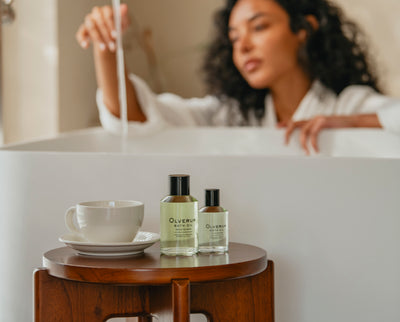
When I formulated the Firming Body Moisturiser, this was the exact moment I had in mind. It's a daily-use, dual-action cream built around a small number of ingredients, each doing a specific job rather than making a general promise:
• Alaria Esculenta Extract: a bio-tech marine ingredient that supports collagen production and helps reduce the oxidative stress triggered by UV exposure.
• Crowberry Extract: helps protect skin from environmental stressors, including UV and pollution, and slows further collagen degradation.
• Meadowfoam Seed Oil: rich in long-chain fatty acids that resist oxidation, forming a light film that reduces water loss in heat.
• Frankincense and Rosemary: calming and antioxidant, helping to settle skin that's had a demanding few months.
Used after cleansing, it's formulated to support what skin is already trying to do: hold on to hydration, rebuild collagen, and recover its tone, rather than promising an overnight transformation. I'd rather give skin the raw materials to repair itself properly than paper over the last two months.
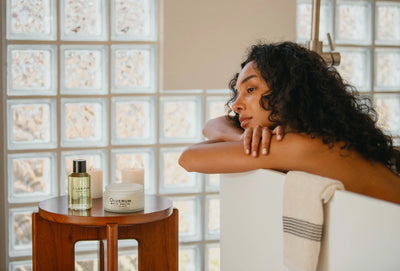
If you've been using the Body Cleanser through summer, pairing it with the Firming Body Moisturiser turns this into a proper two-step ritual: wash away the heat, sun cream and salt of the day, then let the body moisturiser do its work while you sleep.
The morning defence: antioxidants, then SPF
Cosmetic science and skin biology sit at the very centre of my expertise. It is a world driven by evidence, where faith has little place. And yet, I am a great believer in consistency.
My own morning ritual comes down to three things: collagen in water; Olverum Procellular Defence Day Cream, with its Hyper-Antioxidant Complex of Astaxanthin, Reishi Mushroom and stable Vitamin C; and a good quality SPF.
I think of the Day Cream as an additional layer of antioxidant support beneath sunscreen, helping skin defend against the oxidative stress generated by everyday environmental exposure. Then comes SPF, always! I always make sure to check that mine is within its expiry period and choose a formula that layers well enough for me to apply it generously, using the two-finger rule as a practical guide for my face and neck. I may not notice a dramatic difference in my own skin from one year to the next, but over time the value of those habits becomes much clearer. When I look at friends I have known since school, I am grateful to my younger self for starting early and, above all, staying consistent.
Supporting repair from within
Topical care addresses skin from the outside, but collagen synthesis is also influenced by what's happening internally, and this is where a growing number of our customers are adding a daily collagen supplement to their routine.
I've been paying attention to Ancient + Brave's True Collagen, a 100% hydrolysed bovine collagen powder sourced from grass-fed cattle raised on sustainable European farms. It's a Type I collagen, the type found predominantly in skin, hydrolysed to a low molecular weight for absorption, and designed to be taken daily, typically stirred into a hot or cold drink.
In their own 12-week clinical trial, Ancient + Brave recorded skin hydration improving by 63% at six weeks and 76% at twelve, alongside a reduction in transepidermal water loss and a measurable increase in skin firmness over the same period. I'd always encourage you to look at the detail of that trial on their site rather than take the headline figures at face value, but the underlying logic holds: collagen production naturally slows with age and with UV exposure, and supporting it from within is a reasonable complement to what you're doing on the skin's surface.
Taken together, a topical firming cream and an internal collagen supplement are addressing the same problem from two different directions. Neither replaces the other.
What to expect, and what not to
I won't pretend skin bounces back overnight, especially after a summer like this one. But with a consistent bodycare routine over several weeks will give your skin back a sense of itself: more hydrated, firmer to the touch. Not a different version of you. The one you recognise.
Frequently Asked Questions
Does sun exposure really cause collagen loss?
Yes. UV radiation generates free radicals in the skin, which trigger enzymes called MMPs that break down existing collagen faster than the body can replace it. This happens gradually across repeated exposure, which is why the effects of summer often become noticeable by early autumn.
Can a body moisturiser reverse sun damage?
A moisturiser can't undo damage that's already occurred, but a well-formulated one can support the skin barrier, helps reduce further collagen degradation, and give skin the conditions it needs to repair itself. Olverum's Firming Body Moisturiser is formulated with Alaria Esculenta and Crowberry Extract to support this process.
How long does it take to see results from a firming body moisturiser?
Most people notice skin feeling more hydrated within days, with visible improvements in firmness typically building over several weeks of consistent use, ideally as part of a daily evening ritual.
Should I take a collagen supplement as well as using a firming cream?
They work on different levels. A topical cream supports the skin's surface and barrier directly, while an oral collagen supplement, such as Ancient + Brave's True Collagen, provides the body with the raw materials to support collagen synthesis from within. Used together, they address the same goal from two directions.
What ingredients should I look for to support collagen after summer?
Alaria Esculenta Extract and Crowberry Extract both help reduce UV-related oxidative stress and support collagen production. Meadowfoam Seed Oil supports the skin barrier and help skin retain moisture, which matters just as much as collagen support when skin has been through a hot, dry summer.


